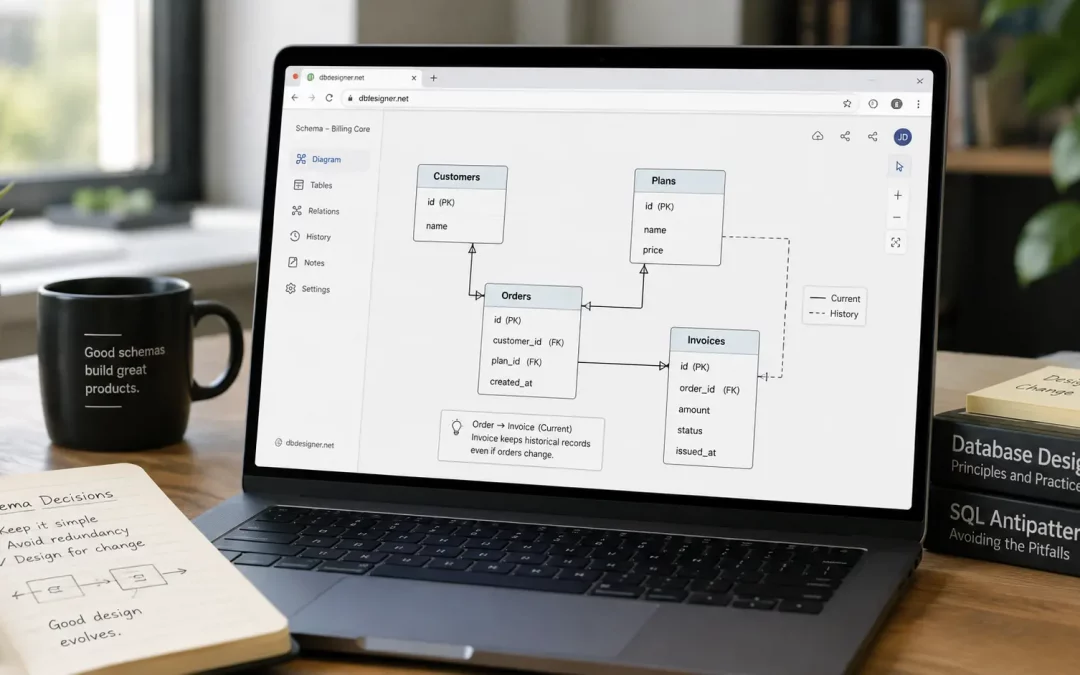
Your Schema Is Really a Theory of What Can Change A customer updates their company name. Should every invoice they have ever received change too? A product manager renames a subscription plan. Should last year’s revenue reports display the new name or the name...
Every Schema Is a Set of Promises Your Product Must Keep A database does not merely store facts. It stores promises. When you add a column called status, you promise that every meaningful condition of that thing can be squeezed into one field. When you connect users...
Schema Design Is Where Your Product Decides What It Believes A database does not simply store information. It quietly declares what your product believes to be true. It decides whether a customer can have one address or many. Whether an order is a moment in time or a...
The Schema Is Where Your Product Makes Its Promises A database does not merely store what your application has already decided. It decides what your application is allowed to believe. That sounds dramatic until a simple product feature turns into a week of awkward...
The Schema Is the Product’s Memory: Why Database Design Shapes What Your App Can Become A database does not simply store information. It remembers the world in a particular way. That sounds dramatic until you have to change a real product. A customer asks why they...




Recent Comments