
Blog
Creating data champions, by giving people the ability to easily automate and manage a company’s entire data pipeline, to get answers instantly.
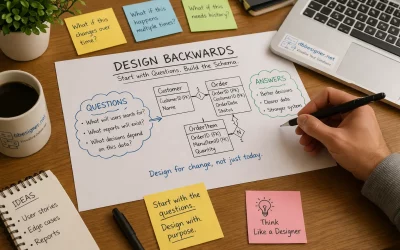
Designing a Database Backwards: A Practical Database Design Guide for Students
Designing a Database Backwards: A Smarter Way for Students to Learn Database Design Most students approach database design the same way: start with entities, draw some ER diagrams, and hope everything makes sense later. But real-world systems don’t break because you...
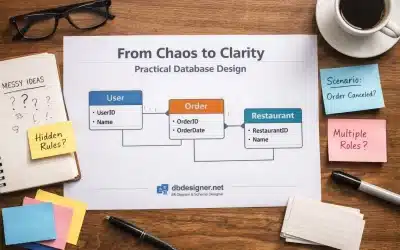
From Chaos to Clarity: A Student’s Guide to Practical Database Design & ER Diagrams
From Chaos to Clarity: How Students Can Turn Messy Ideas into Solid Database Design Most students don’t struggle with database design because it’s “too technical.” They struggle because real-world ideas are messy, incomplete, and constantly changing. The real...
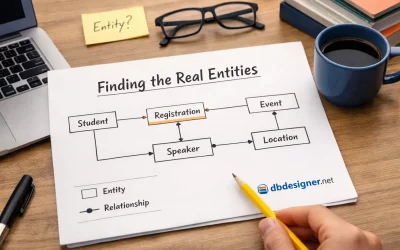
How Students Can Identify Real Entities in Database Design
The Hidden Skill in Database Design: Learning to Spot the Real Entities Many students start learning database design by drawing tables immediately. They open a notebook, list a few columns, and feel like they are making progress. But experienced designers know...
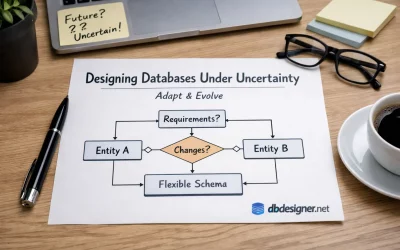
Designing Databases Under Uncertainty: A Practical Guide to Database Design for Students
Designing a Database When the Rules Keep Changing: A Student’s Survival Skill You can usually spot a student-built database design from a mile away. Not because it’s “wrong” in a textbook way. But because it assumes the world will behave. It assumes: every customer...
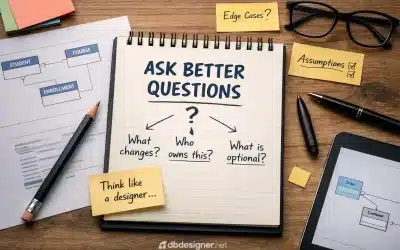
Asking Better Questions: A Smarter Way for Students to Learn Database Design
The Hidden Skill in Database Design: Asking Better Questions Most students think learning database design means mastering ER diagrams, memorizing symbols, and translating requirements into tables. But here’s the uncomfortable truth: Bad questions create bad schemas....
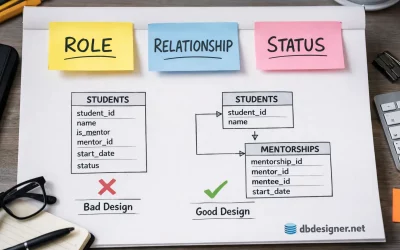
Designing Databases for Change: A Practical Guide to Database Design for Students
Role, Relationship, or Status? The Fastest Way Students Improve Database Design If you’ve ever stared at a problem statement and thought, “I can’t tell what the tables should be,” you’re not behind — you’re at the real starting line. Strong database design is the art...